
Beyond Top Speed: 5 Metrics That Actually Prove You're Improving
Every watersports athlete remembers the first time they hit a new personal best for top speed. It is an undeniable rush, a moment of pure adrenaline that makes all the preparation worthwhile. However, while top speed is an exciting number to share with your crew, it is rarely the most accurate indicator of your overall progression on the water.
A sudden gust of wind, a perfectly timed wave, or a favorable current can easily spike your maximum speed for a few seconds. These moments are thrilling, but they do not necessarily mean your technique has improved or that you are becoming a more efficient rider. To truly understand your performance and break through training plateaus, you need to look beyond the peak numbers.
By leveraging comprehensive GPS tracking and performance analytics, you can uncover the real story behind your sessions. Here are five essential metrics that actually prove you are becoming a better, faster, and more consistent athlete on the water.
1. Average Speed Over Distance
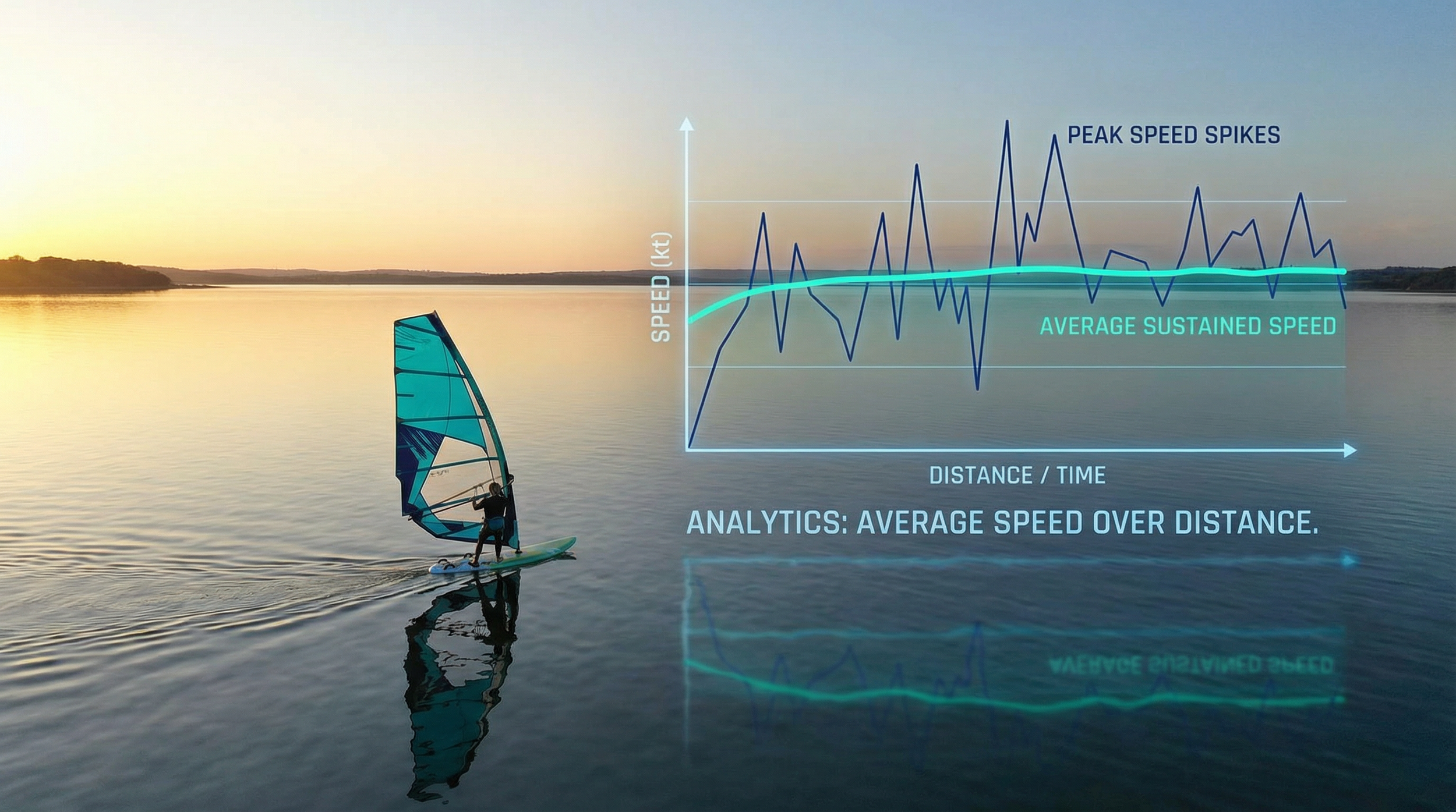
While top speed measures a fleeting moment, your average speed over a set distance reveals your ability to maintain control and efficiency. Whether you are windsurfing across a bay or wingfoiling upwind, sustaining a high average speed requires consistent technique, proper gear tuning, and the physical endurance to handle changing conditions.
Tracking your average speed helps you identify whether you are truly getting faster or just getting lucky with gusts. If your top speed remains the same but your average speed increases over a 5-kilometer run, you have undeniably improved your sustained performance.
2. VMG (Velocity Made Good)
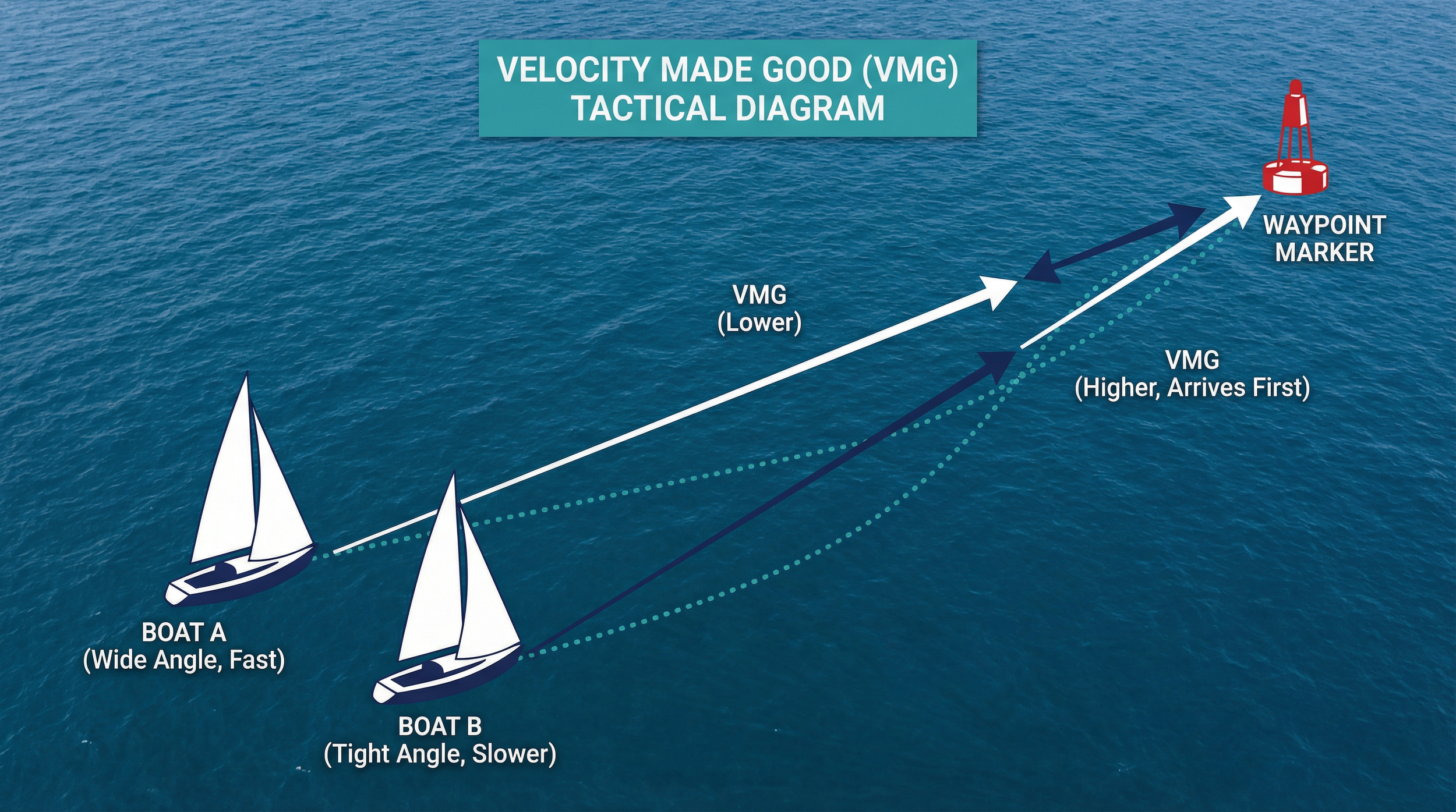
For sailors, windsurfers, and foilers, Velocity Made Good (VMG) is arguably the most critical metric for tactical racing and efficient upwind/downwind riding. VMG measures your actual speed toward a specific target or waypoint, factoring in the angle you are sailing relative to the wind.
You might be flying across the water at 20 knots, but if your angle is poor, a rider moving at 15 knots with a better angle will beat you to the mark. By analyzing your VMG through the Waterspeed app, you can determine the optimal balance between boat speed and pointing angle, allowing you to sail smarter rather than just harder.
3. Maneuver Success Rate (Tacks and Jibes)
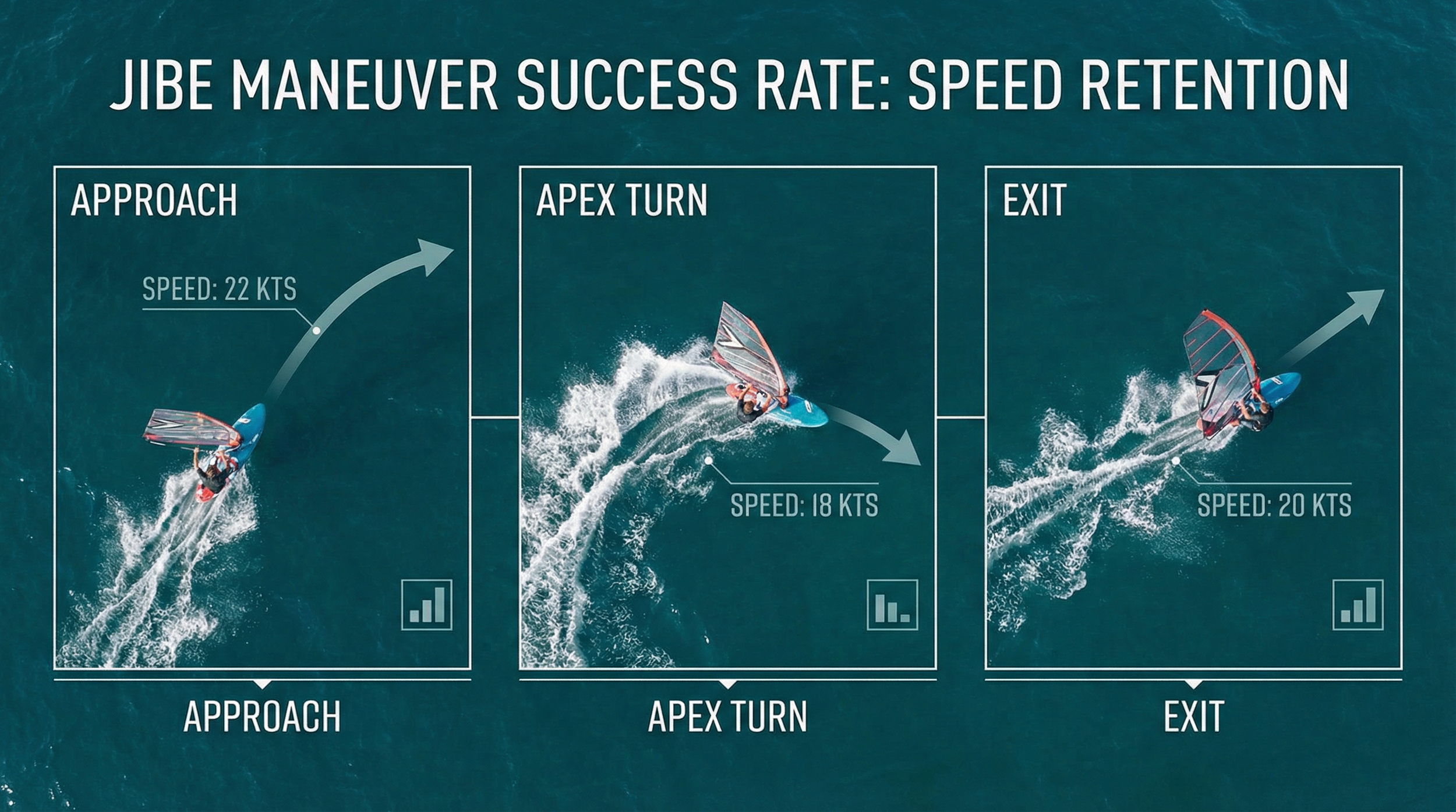
Races and personal bests are often won or lost in the corners. A fast straightaway means very little if you lose all your momentum during a tack or jibe. Tracking the success rate and speed retention of your maneuvers is a powerful way to measure technical progression.
Instead of just counting how many times you turned, look at how much speed you carried through the apex of the turn and how quickly you accelerated afterward. Consistent, dry jibes with high exit speeds are a hallmark of an advanced rider. Monitoring this data allows you to pinpoint exactly where you are losing time and focus your next session on specific technical drills.
4. Foiling Efficiency and Glide Time
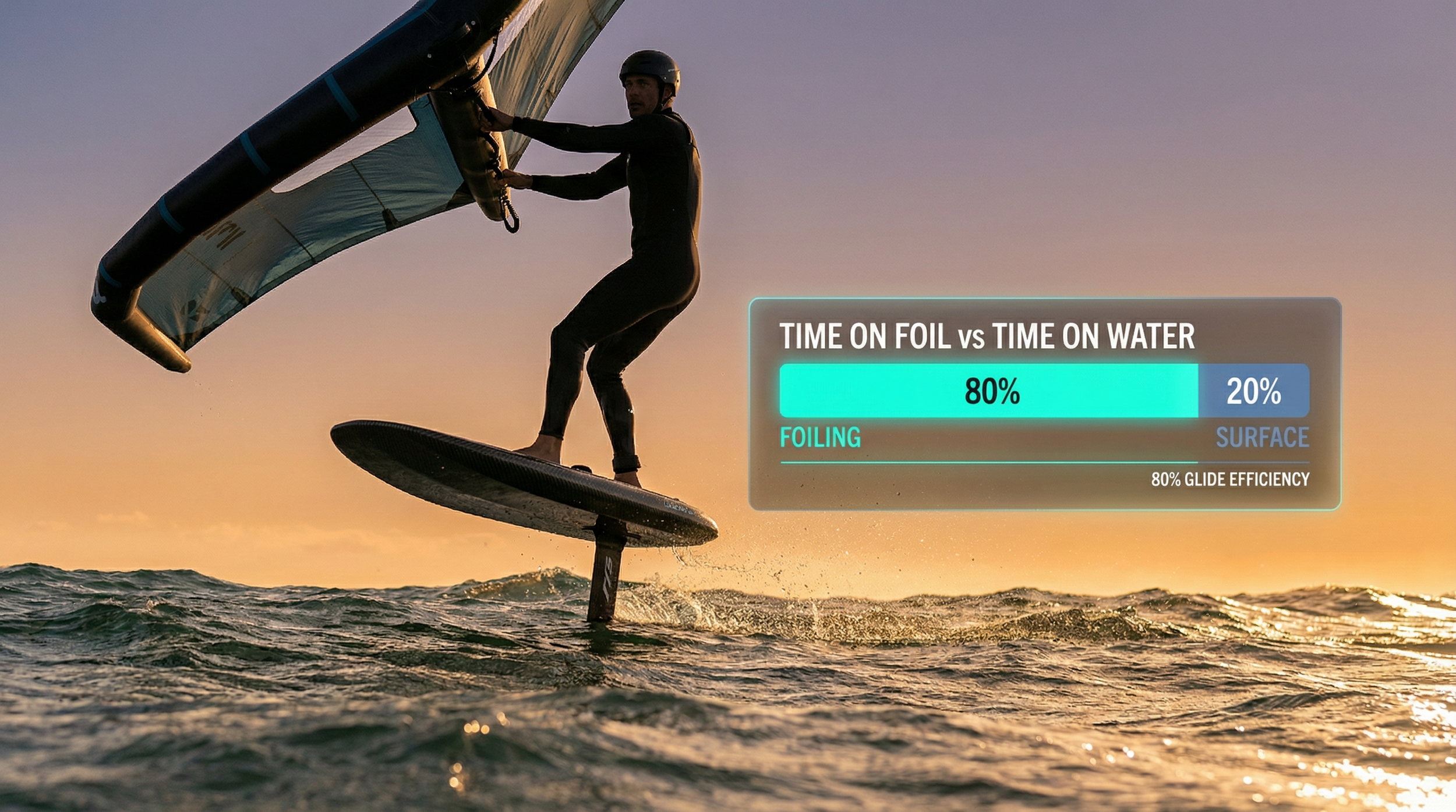
For the growing community of wingfoilers and kitefoilers, time spent on the foil is the ultimate measure of success. Foiling efficiency tracks how long you remain elevated compared to the total duration of your session.
If you notice your glide time increasing and your touchdown frequency decreasing, your balance, pumping technique, and foil control are improving. This metric is especially useful in marginal or gusty conditions, where maintaining flight requires precise input and an intuitive understanding of the water's energy.
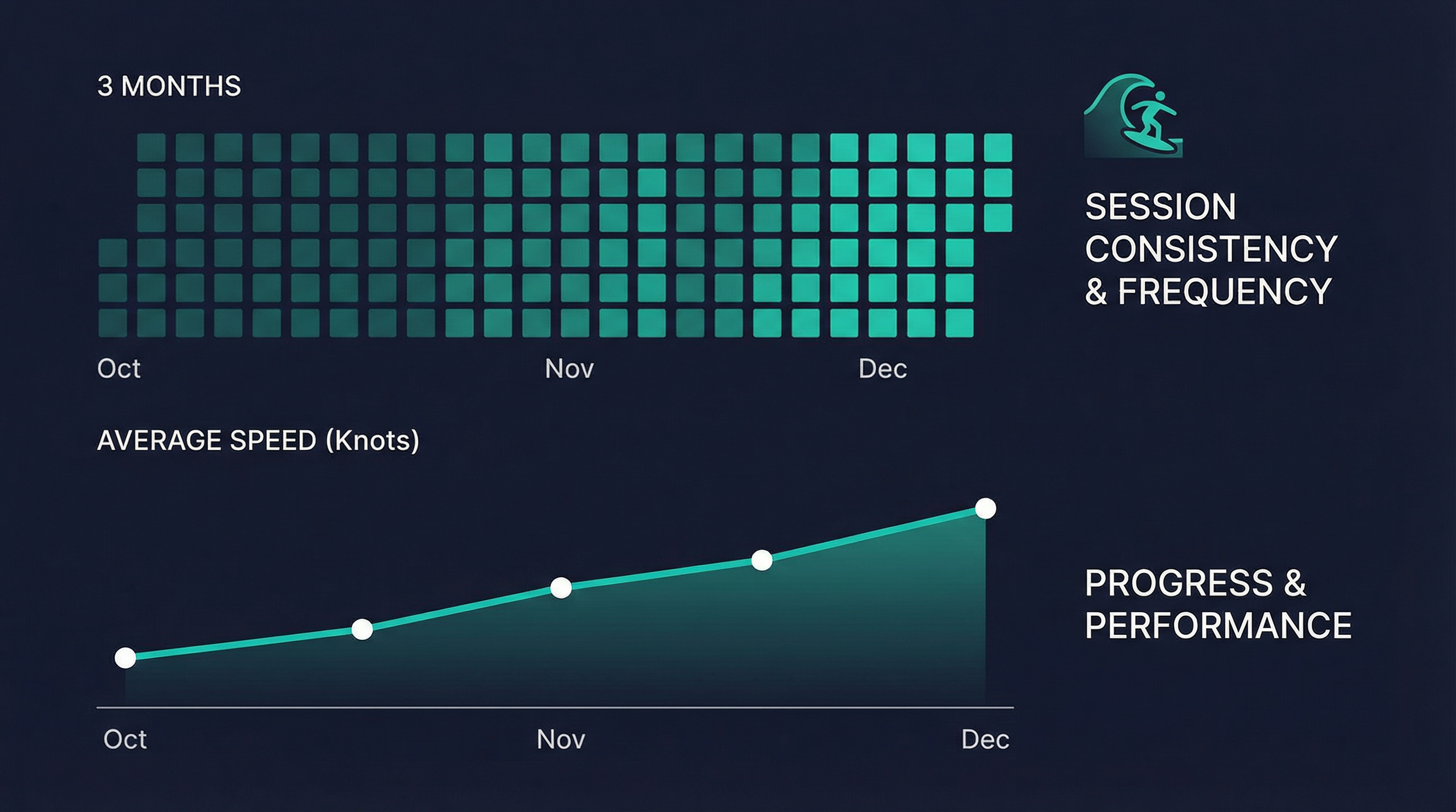
5. Session Consistency and Frequency
The most overlooked metric in watersports is simply how often you get on the water and how consistent your performance is across those sessions. Progression is rarely linear; it is built through regular exposure to different conditions, wind strengths, and sea states.
By logging your sessions consistently, you build a comprehensive history of your time on the water. You can look back and see that while today's session felt slow, your average speed in 12 knots of wind has actually increased by 15% over the last three months. Consistency in tracking breeds consistency in performance.
The Bottom Line
Top speed will always be a fun metric to chase, but it is only one small piece of the performance puzzle. By shifting your focus to average speed, VMG, maneuver efficiency, and overall consistency, you transform your GPS tracking data into actionable insights.
The next time you log a session with Waterspeed, take a few minutes to dive deeper into the analytics. You might just find that you are progressing much faster than you realized.
