Foil training drills: eight drills for cleaner, longer flights
A controlled takeoff broken into three checkpoints, then eight drills (ride-height ladders, pump-and-glide, carve lines, touchdown recovery and more) and how to check in your data that they're working.
By Paula Acebo · Updated
Read in: Italiano · Français · Español · Deutsch · Nederlands · Português

The drills below train a controlled takeoff, steady ride height, pumping, turns and touchdown recovery. Pick one skill per session: a low, stable flight line, a longer glide through a gybe, or getting up with less pumping. Each run then has a purpose, and the review afterwards has something to measure.
How do you take off on a foil with control?
Build usable speed first, then lift progressively and settle into a stable, athletic flight position. Speed comes before height.
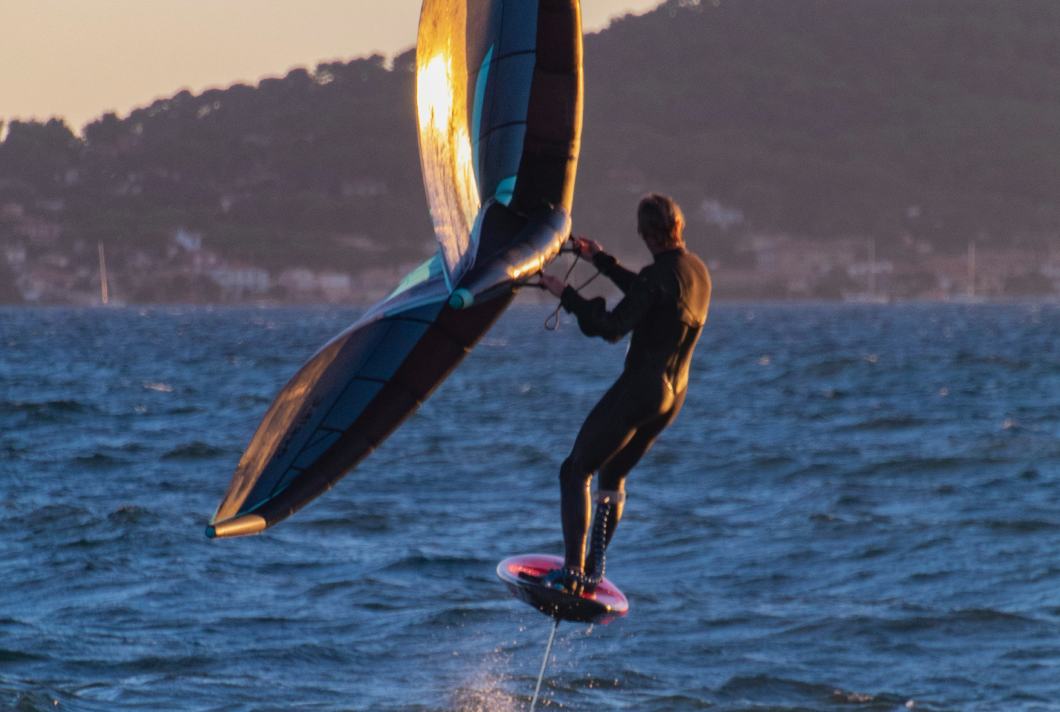
Picture a wing foiler building speed on a flat-water reach: a course broad enough for forward drive, knees flexed, hips centred over the board, eyes ahead at the water in front of them. As speed builds, they let the foil lift the board instead of stomping on the back foot.
A rushed takeoff puts you too far back, drives the foil too high and turns the rest of the reach into corrections. A composed one puts your body where the foil can work as designed. Break it into three checkpoints:
- Build usable speed. Get the board travelling cleanly through the water first, with quiet shoulders, room in the knees and the power driving you forward. If it pulls you upright, you have too much power for the speed.
- Lift progressively. As the foil engages, think “stand taller”. Pressing hard through the back foot may get you up for an instant, then sends the foil toward the surface.
- Settle into flight. Stay athletic: ankles, knees and hips absorb the foil’s movement while the upper body stays calm. Standing rigidly tall makes every bump go straight into the foil.
Two errors are common: forcing the board up before it has speed (wait one more beat and keep driving forward) and looking at the foil or the nose, which shifts your posture forward and makes balance reactive.
Eight foil drills
1. Controlled lift-offs
Rise onto foil smoothly to a stable height, without popping up. Get enough speed for lift, add back-foot pressure gradually, keep your chest quiet and your eyes forward. Hold for ten seconds, then reset and repeat.
2. Ride-height ladders
Fly low and safe for a few seconds, rise slightly, hold, return low. Think of it as three small gears. Bouncing between touchdowns and over-foiling is what this drill trains out, and steady height makes every other skill easier.
3. Quiet-upper-body runs
Ride a straight line with your head, shoulders and hands as calm as possible while the lower body handles pitch. Film it if you can.
4. Pump-and-glide intervals
Alternate five to eight deliberate pumps with a relaxed glide. Pumping is a timing skill for connecting bumps, recovering from lulls and carrying speed through transitions.
5. Carve entry and exit lines
Before full gybes or tacks, train the shape of the turn: comfortable reach, look at your exit, carve a broad arc with gentle foil pressure. No foot or hand switch yet.
6. Touchdown recovery reps
Lower the board until it just touches the surface, then use steady power and measured back-foot pressure to get back up without a full reset. Touchdowns will happen; this drill teaches you to fly on after them.
7. Transition pieces
Break a gybe, tack or foot switch into parts: the approach at lower ride height, the carve, the switch, the exit. Practise each before linking them.
8. Speed-control runs
Three runs on a known line: relaxed cruise, moderate pace, then accelerating while keeping the same quiet posture and height. Extra speed only helps if your posture and height stay the same.
How should you structure a foil training session?
Warm up with the basics, spend the middle on one skill, and finish easy. Start each session with two or three controlled lift-offs and ride-height ladders. Use the middle for the skill that needs most attention. Finish with a few relaxed runs; tired, forced attempts mostly practise bad movement.
How do you know your foil drills are working?
Check your tracking data after the session. Feel tells you a lot, and tracking confirms whether a change improved the ride. Look for:
- longer uninterrupted foiling segments,
- fewer abrupt speed drops after takeoff,
- more consistent speed across matching reaches,
- a higher foiling efficiency in similar conditions,
- better exit speed in transitions.
When a run felt better, name what changed: you stayed lower through the rise, waited longer for speed, or held a calmer line. Next session you can repeat it on purpose. For a full review routine, see How to analyse a foil session.