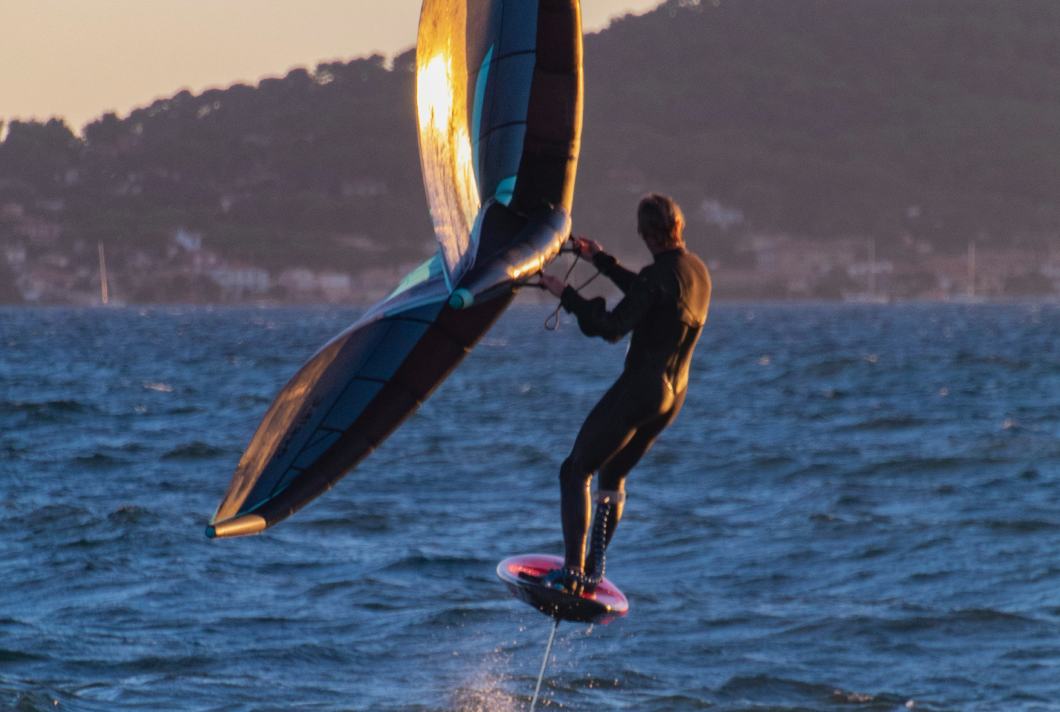
How to improve your jibes with GPS data
On a wing or a windsurf board, most failed jibes come down to entry speed. What to measure on every jibe, what good looks like, three patterns to look for and a five-jibe routine.
By the Waterspeed team

Most failed jibes on a wing or a windsurf board come down to one number: speed going in. Record your session with GPS, compare the entry speed of the jibes you made with the ones you fell off, and you’ll usually find a clear threshold. Then work on one thing at a time and check the numbers after each session.
What should I measure on each jibe?
| Number | What it tells you |
|---|---|
| Entry speed | How fast you were going when you started the turn |
| Exit speed | How fast you came out |
| Speed change | Exit against entry, as a percentage |
| Angle | How many degrees you turned |
| Duration | How long the turn took |
| Made or missed | Whether you kept enough speed to count it as completed |
Waterspeed finds the turns automatically for sports with a sail or a wing. Tap a jibe on the map for its entry and exit speed, angle and direction, or open the list for all of them and your share of missed jibes. On a foil, also set your minimum foiling speed, so foiling sections show on the map and you can see whether you stayed up through the turn.
What does a good jibe look like in the numbers?
Waterspeed Ultra rates each jibe:
| Rating | Angle turned | Speed loss | VMG loss |
|---|---|---|---|
| Excellent | 90° to 150° | under 10% | under 5% |
| Good | 80° to 160° | under 20% | under 10% |
| Needs work | outside that | over 20% | over 10% |
Use it as a direction of travel: going from 40% loss to 25% is real progress.
Three patterns to look for
- Entry speed varies a lot between jibes. In similar wind, that’s a set-up problem, not the turn itself: bear away for longer and build speed before you carve.
- Good entry, big speed loss. You go in fast and come out slow; look at what happens mid-turn, from board trim to when you release and flip the wing or sail.
- Missed jibes on one side. Compare port and starboard. Most riders have a weak side, and the list makes it obvious.
A five-jibe routine
- After each session, look at your last five jibes only.
- Compare the entry speed of the ones you made with the ones you missed.
- Pick one change for next time, such as “bear away two seconds longer before the carve”.
- Check the same numbers next session; session comparison shows the trend over weeks.
Tips riders share
From wingfoil riders on Reddit: split the turn (carve 90°, ride straight downwind for a couple of seconds, then finish it), practise riding downwind with the wing flagged above your head before trying to turn, and go faster than feels comfortable, because speed buys glide time.
The app counted a wobble as a jibe. What now?
Usually the wind direction is off: edit it on the session. You can also add, remove or move a manoeuvre with Manual Adjust on the web app and Android.
Related: How to review a windsurf session, How to analyse a foil session, Your tacks are losing you more speed than you think.