Race timers compared: countdown watches, sailing watches, apps and instruments
Four ways to time a sailing start, what matters more than the countdown itself (resync, alerts, readability), GPS start-line tools, and a start routine built around your timer.
By the Waterspeed team

Every race timer can count to zero. The differences show up when the fleet is compressed, the water is rough and your attention is split across ten decisions. Committees reset sequences, your crew calls a sync late, and you need the timer to keep up.
The four main options
Basic countdown watch
A simple waterproof watch with a repeat countdown. Affordable, familiar, a battery that lasts for years. Set a five-minute sequence, start it on the signal, sail. Enough if you race casually a few times a year.
Dedicated sailing watch
Built around the start sequence: large digits, synchronised countdowns, vibration or sound alerts, buttons that work with wet hands, and race modes that let you resync quickly if you started late.
Smartphone or smartwatch app
More flexible. The phone gives you a big setup screen, presets and a session record; the smartwatch puts the countdown and haptic alerts on your wrist while the phone stays protected. The best apps keep working after the gun, recording the race for review.
Waterspeed’s Race Countdown (Pro) runs on iOS, Android and Apple Watch. You sync it to the official start, get sound and vibration alerts at 4 minutes, 1 minute, 30 seconds and for the final 10 seconds, and tracking starts automatically at zero. On Apple Watch Ultra you can start it with the Action Button. How to set it up.
Connected marine instrument
For keelboats and teams with an electronics network, a cockpit display makes timing a shared system: the countdown visible to helm, trimmers and tactician, next to GPS speed, heading, line information and wind data.
What matters more than the countdown
Judge a timer by how it performs in the last few minutes, not by the length of its feature list:
- Speed of use. Start and correct the sequence in seconds, with wet hands, without staring at the screen.
- Resync. Committees postpone and restart. Quick sync to the nearest minute is essential.
- Alerts you can feel and hear when it gets busy.
- Readability in glare and spray.
- What happens after the gun: does the start feed into your race record and review?
GPS start-line tools: useful, not magic
GPS can help answer a practical question: can I make the line at my current speed? Some systems let you ping the committee boat and pin, calculate distance to the line, estimate time to burn or show line bias. They’re valuable, but they depend on accurate pings and GPS precision of a few metres, so use them alongside your own line sights.
Match the timer to your racing
- Dinghy sailors: light and glanceable, a sailing watch or smartwatch.
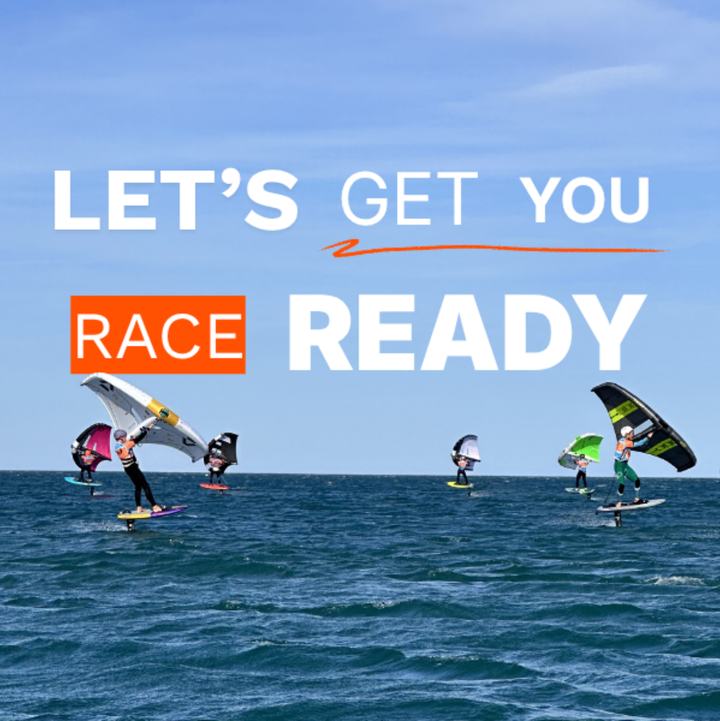
- Foiling sailors: haptic alerts and minimal interaction, because the final approach demands constant balance.
- Keelboat crews: a shared cockpit display and a clear communication routine.
- Training with friends: an app that records the whole session, so you can review starts afterwards.
Build a start routine around the device
No timer fixes an unpractised start.
- Set the device before leaving the dock and confirm the sequence with your crew.
- Decide what each alert means. For example: at 4 minutes, check the line and wind; at 2 minutes, choose your approach; at 1 minute, commit to position and speed.
- Practise it in training, not only on race day: rehearse line approaches and acceleration with the countdown running.
Signs your current timer is holding you back
You miss sync adjustments because the controls are clumsy, you can’t hear or feel the alerts when it’s busy, or you have no record of your start to learn from. For start technique, see How to start a sailing race. For reviewing starts, see Race analysis: starts, marks and replay. For the bigger picture, see How to prepare for a race.