
How to plan your best water sports trip this summer
Summer is when most water sports riders finally get the time to travel. A week in Tarifa. A few days on Lake Garda. That trip to Fuerteventura you've been talking about since January. The destination is usually not the problem — the problem is everything that comes before you hit the water.
Wrong gear. Conditions you didn't expect. Showing up at a spot that looks great on Google but turns out to be flat, crowded, or only good for a discipline you don't ride. Anyone who has planned a water sports trip more than once has been there.
Explore+ was built specifically for this. Here's how to use it to plan a summer trip that actually delivers.
Step 1: Find the spot
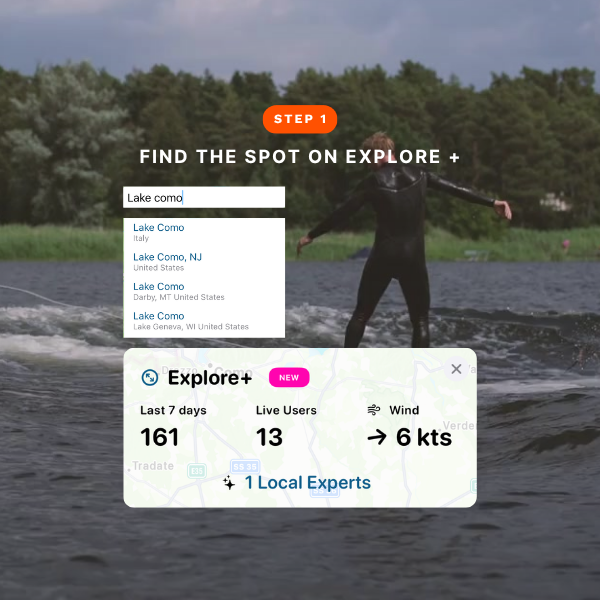
Open Explore+ and search any destination — a lake, a coastline, a bay, a town. The map fills up with real activity from the Waterspeed community: sessions logged by windsurfers, wingfoilers, kiters, paddlers, and sailors who have been there recently.
You're not looking at a curated list of "top spots" written by someone who visited three years ago. You're looking at what riders are actually doing on the water right now. How many sessions in the last seven days. Which sports are most active. Whether the spot is getting used or sitting empty.
This alone changes how you evaluate a destination. A spot with 40 sessions in the last week tells a very different story than one with three.
Step 2: Check who's riding there
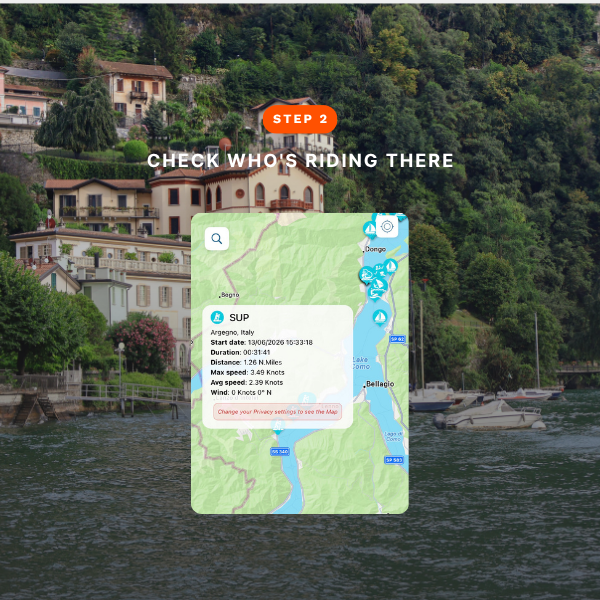
The summary panel goes deeper than just session count. You can see the most common sport at that location, the average wind conditions, peak days of the week, and max speeds recorded nearby. If you're a windsurfer planning a trip around wind, knowing that a spot averages 18 knots on weekday afternoons is genuinely useful information — the kind you'd normally have to dig through forum threads to find.
It also helps you think about gear. Consistent 15–20 knot wind with short chop calls for a different setup than a lake spot with thermal afternoon breezes. Seeing the data before you travel means you pack the right quiver instead of the one you always bring by default.
Step 3: Connect with Local Experts
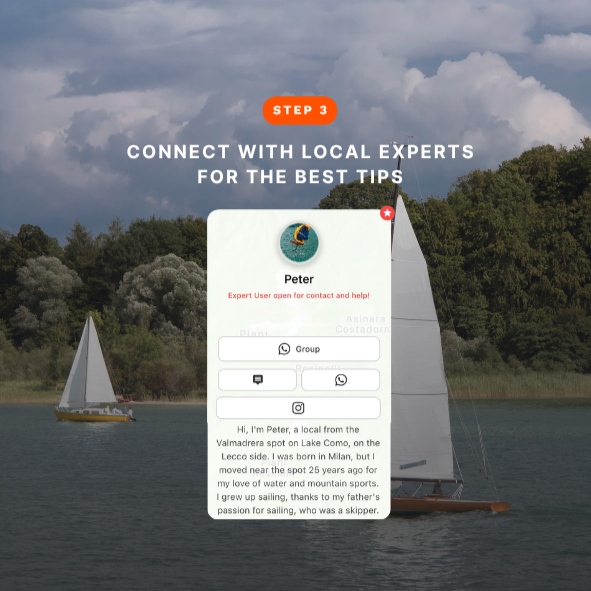
Some spots on Explore+ have Local Experts — riders who have marked themselves as open to contact and willing to help. These are people who actually ride that spot regularly and know things no app can tell you: which side of the bay works best in northerly wind, where to park with a van and a trailer, whether the rental school nearby is worth it or not.
Tap their profile and you can message them directly — via WhatsApp, Instagram, email or phone. It takes two minutes and can save you from a wasted day on the water. Most riders in the water sports community are genuinely happy to share local knowledge. Explore+ just makes it easy to find them.
Step 4: Hit the water — and track it
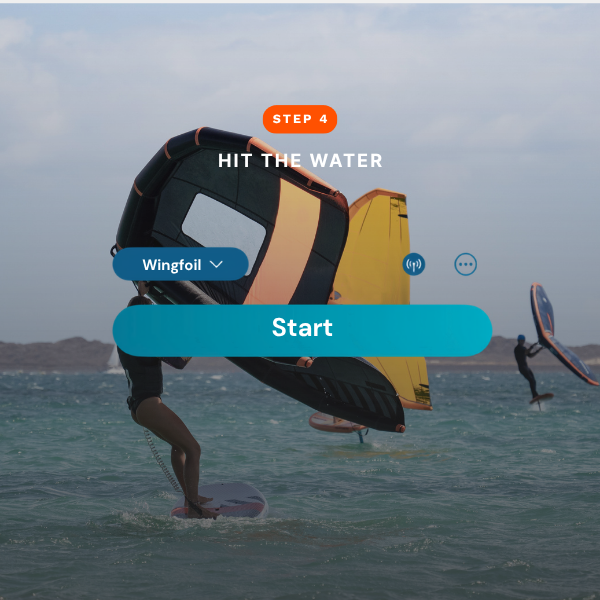
Once you arrive, Waterspeed does what it does best: tracks your session. Speed, distance, duration, GPS route. Everything logged automatically so you can focus on riding instead of fumbling with your phone between runs.
The sessions you record on a trip are often the ones you want to remember most. A personal best speed on a new spot. A long downwind run on a lake you'd never been to before. Waterspeed keeps that data so you can look back at it, compare it to your home sessions, and actually see what the change of scenery did for your riding
Plan the Trip, Not Just the Travel
The logistics of a water sports holiday — flights, accommodation, gear transport — are already complicated enough. The one part you can make significantly easier is knowing what to expect on the water before you get there.
Explore+ gives you real data from real riders, direct access to local knowledge, and a way to track every session once you arrive. It won't book your flights, but it will make sure the riding part of the trip is worth the journey.
