
Not progressing in water sports? These 7 Plateaus might be why
You’re going on the water consistently.
You’re putting in the time.
You feel committed.
And yet… your progression feels slower than expected.
This is one of the most common frustrations among watersports athletes — whether you sail, wingfoil, kite, row, SUP, or practice other GPS-trackable watersports.
The truth?
Most plateaus are not about motivation. They’re about awareness and structure.
Here are the real reasons many riders and athletes stop progressing — and what actually helps.
1) You’re training, but not really measuring — or not using the right tools
Many athletes rely on feeling:
“Today felt fast”, “I think I went further”, “That session was better”… But feelings are unreliable indicators of progress.
On the water, conditions change constantly:
Wind
Currents
Chop
Swell
Temperature
Fatigue
Without tracking sessions, it’s hard to separate:
👉 real improvement
👉 from good conditions or lucky days
And even when people do track, they often use generic fitness tools designed for running, cycling, or gym workouts.
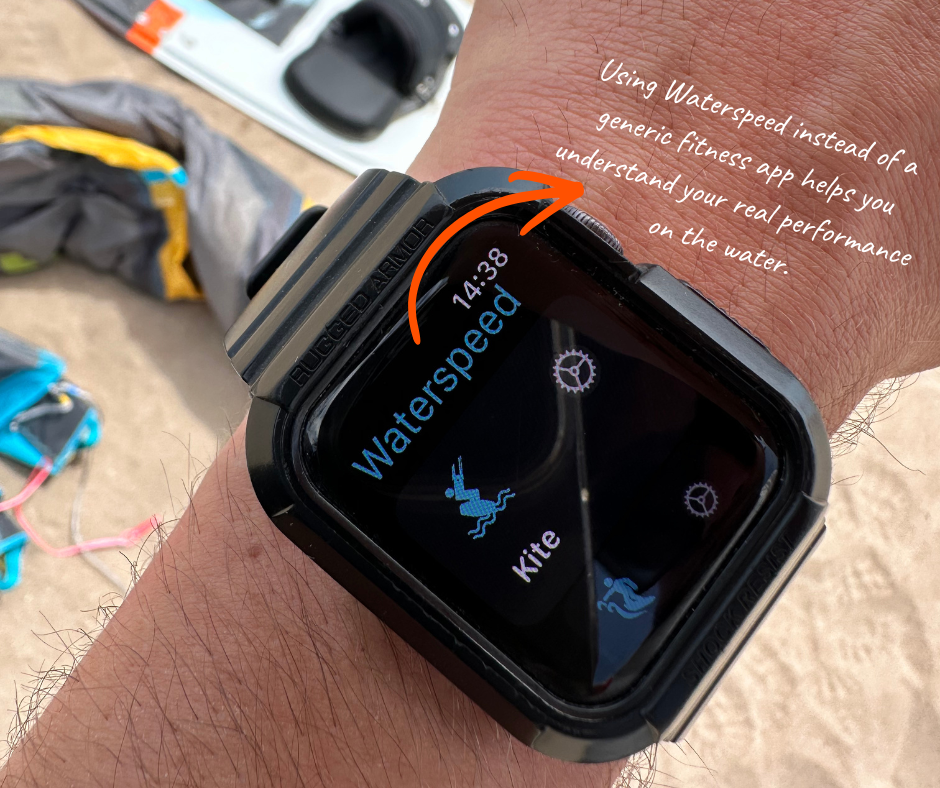
Waterspeed is built to fit into your existing watersports setup.
Those tools can record activity time, but they’re not built around how watersports actually work.
They usually don’t focus on:
On-water speed patterns
Distance over water routes
Session-to-session comparison in variable conditions
Sport-specific context
What helps
Tracking simple, relevant metrics like:
Distance
Average speed
Session frequency
Session duration
Gives you a clearer picture over time.
Where Waterspeed fits
Waterspeed is designed specifically for watersports, so it focuses on the types of stats that matter on the water. It helps log your sessions and see trends over time — not just one-off days.
It doesn’t replace coaching or technique work, but it gives visibility into your on-water activity in a way generic fitness trackers often don’t.
2) You repeat sessions instead of improving them
Many riders unintentionally “mow the lawn”: they ride, they cruise, and they do what feels comfortable. This feels productive, but your body and skills adapt quickly. Progress comes from intentional variation.
What helps
Try simple structure:
First 20–30 minutes: one skill focus (tacks, jibes, transitions, pumping, starts, etc.)
Rest of session: freeride and fun
How Waterspeed helps
Use session notes (or your own quick post-session log) + stats to connect “what you practiced” with “what changed.”
3) You focus too much on top speed
Top speed is fun, but it’s not the best progress metric.
A gust, wave, or current can spike your max speed without reflecting real skill improvement.
Better indicators
Average speed over a distance
Consistency across sessions
Distance covered with control
Time spent at a steady pace
These show repeatable performance.
Where Waterspeed fits
Waterspeed allows you to view averages and session data, which often reveal more than max speed alone.
4) You don’t review your sessions (so you repeat the same mistakes)
If you never look back, you’re training without feedback. In communities, you’ll often see people improve faster once they start intentionally analysing what’s holding them back—technique, gear, conditions, or simply the type of sessions they’re doing.
What to do
After each session, answer:
What felt better than last time?
What limited me today?
What will I try next time?
Where Waterspeed fits
Having session history makes it easier to look back and compare. It won’t tell you why something happened, but it helps you notice patterns.
5) Your gear may be a limiting factor
Across many watersports, athletes sometimes outgrow equipment.
Examples:
A beginner board limiting control at speed
A foil setup optimized for stability, not performance
Equipment not matched to conditions
What helps
Change one variable at a time and compare similar sessions.
Where Waterspeed fits
Tracking comparable sessions before and after gear changes can help you see differences more clearly.
6) You lack consistency over time
Two intense sessions per month won’t build the same progression as regular exposure.
Watersports are highly skill-based. They reward repetition, familiarity, and time spent reading conditions.
But consistency in watersports doesn’t always mean “every week.” Weather, seasons, travel, access to spots, and daily life can all limit how often you get on the water — and that’s completely normal.
The key isn’t perfection. It’s making the most of the sessions you do have.
What helps
Consistency > intensity
Short, focused sessions often beat rare marathon sessions.
And when sessions are spaced out:
Set a small focus for each session.
Revisit the same skill across multiple outings
Build progression gradually
Even moderate consistency over months matters more than bursts of activity.
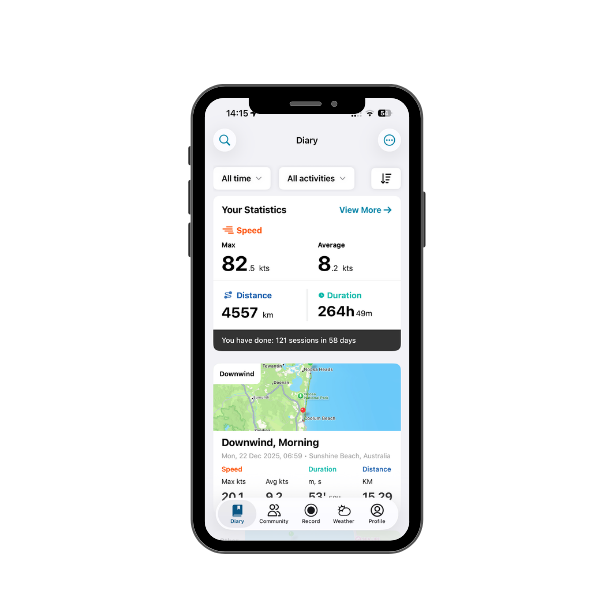
Where Waterspeed fits
Session logs help you stay aware of your real activity patterns over time.
Many athletes feel inconsistent but are actually more regular than they think — or the opposite.
Seeing your session history can help you:
Understand your rhythm.
Spot long gaps.
Set realistic goals based on your lifestyle.
Waterspeed won’t create more windy days — but it can help you make better use of the ones you get.
7) You don’t define what “better” means
This is the core plateau problem: you feel stuck because you’re not measuring progress in a way that matters.
What to do
Choose one benchmark for the next 2–4 weeks:
“Increase average speed over my regular route”
“Increase distance per session by 10%”
“Hit 3 focused skills sessions per week”
“Improve consistency (less variance)”
Clear goals create direction.
Where Waterspeed fits
Benchmarks are easier when your sessions are logged, comparable, and visible.
The Watersports Progress Loop (Simple + Effective)
When progress stalls, don’t “train harder.” Train clearer:
Track your sessions
Review trends (not one-off days)
Adjust one variable (skill focus, gear, session type)
Repeat for 2–4 weeks
That’s how plateaus break.
Quick checklist: “Why am I not progressing?”
If you answer “yes” to any of these, you’ve found your bottleneck:
I can’t describe what improved in my last 5 sessions
I only look at max speed
I do the same session every time
I don’t practice my weak side
My gear feels like it’s holding me back
My sessions are inconsistent week to week
I never compare sessions in similar conditions
Pick one and solve it for two weeks. You’ll be surprised how fast things move again.
Final thought
Progress on the water isn’t about pushing harder every session.
It’s about:
Understanding your sessions.
Staying consistent.
Making small adjustments.
Tracking your evolution over time.
