
Why data matters in modern sailing
From Weekend Sailors to SailGP — Performance is now measured, not guessed
Sailing isn’t just wind and intuition anymore.
For a long time, the sport was guided by feel, experience, and time on the water. Sailors improved by sailing more, watching others, and learning through repetition.
That still matters. But today, something has changed.
Modern sailing is becoming increasingly data-driven — and this shift is transforming not only how sailors improve, but how the entire sailing ecosystem grows.
From weekend foilers to professional race teams, data is quietly becoming one of the most valuable tools on the water.
The Limits of “Sailing by Feel”
Ask most sailors how a session went and you’ll hear:
“It felt fast.”
“I think my tacks were better.”
“The wind seemed stronger today.”
The challenge?
Water conditions are never constant:
Wind strength and direction shift.
Currents change.
Chop and swell vary.
Fatigue affects performance
Gear setup evolves session to session
Without data, it’s hard to know whether you actually improved — or simply had better conditions.
This is where performance tracking changes the game.
Data turns sailing into a feedback loop
When sailors start tracking their sessions with tools like Waterspeed, something powerful happens:
They move from guessing → to understanding.
Instead of relying on memory, they can review: Average speeds, distance trends, foiling time and efficiency, maneuver frequency, performance in different wind ranges, session consistency over time.
This creates a feedback loop that accelerates learning.
Not by sailing more, but by sailing smarter.
Why high-performance sailing is already data-driven
At elite levels, sailing has been data-driven for years. Race teams analyze performance, optimize strategy, and refine decisions using detailed metrics.
This is one reason the partnership between Waterspeed and the NorthStar SailGP Team is significant.
As Official Technology Supplier, Waterspeed supports a vision where:
Performance data fuels storytelling.
Digital insights deepen fan engagement.
Communities connect more closely to the sport.
Sailing becomes more accessible and understandable
This reflects a broader industry shift:
Sailing is no longer just experienced. It’s analyzed, shared, and interpreted.
And that creates value far beyond performance.
Data is now accessible to everyday sailors
What used to require onboard systems and analysts is now available in a pocket.
Modern tracking tools allow sailors to:
Automatically log sessions
Review performance post-session
Compare gear setups
Track progress across months and seasons
Share sessions with coaches or peers
For foiling disciplines in particular — where small changes in speed or trim matter — data provides clarity that feel alone cannot.
From tracking to tactical insight: The next evolution
As sailing becomes more data-driven, simple tracking is no longer the end goal.
More sailors are starting to ask deeper questions:
Was that the right tactical choice?
Did my setup really improve performance?
Where am I gaining or losing distance?
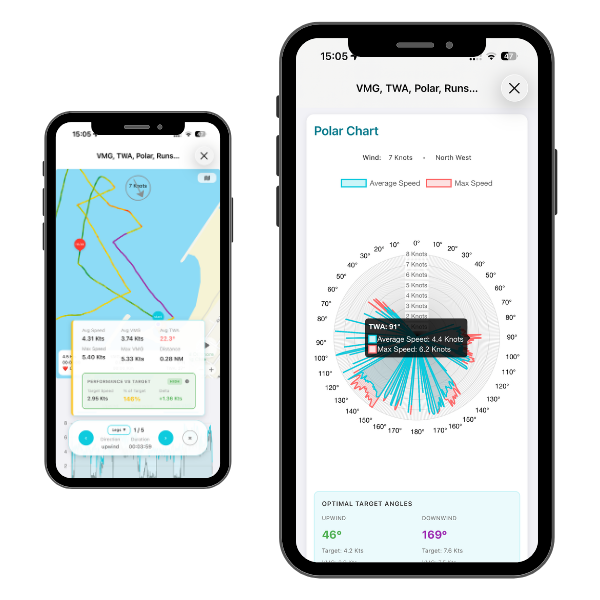
This reflects a broader shift in the sport. Sailors are moving from recording sessions to understanding decisions.
That’s where advanced analytics enter the picture.
Tools like VMG analysis, wind-angle context, and polar performance charts are becoming increasingly relevant — not only for elite racers, but for ambitious amateurs who want to train with more structure.
Waterspeed’s Ultra is one example of this evolution. It adds a tactical layer of analysis on top of standard tracking, helping sailors interpret how wind angle, course choices, and consistency influence real outcomes on the water.
For performance-oriented sailors, this represents the next step:
Not just knowing what happened, but understanding why it happened.
And in a sport shaped by variables, understanding “why” is where real progress begins.
Real impact on real sailors
Waterspeed user and foiling sailor Alex Simmonds describes how data has become part of his learning process: “Waterspeed helps me analyse my sessions off the water and improve my boat handling.”
He also highlights the safety dimension that tracking can bring:
“With live tracking, I can share my location and speed with friends or family whenever I go out.”
For many sailors today, performance tracking isn’t only about speed or distance — it’s also about awareness, safety, and confidence on the water.
The Future of Sailing Is Measured
The next generation of sailors is growing up with: GPS tracking, performance analytics, digital communities, shareable session data…
This doesn’t remove the magic of sailing, It enhances it. Because understanding your performance makes every session more intentional and rewarding.
Final thought
Wind will always be unpredictable. Your progression doesn’t have to be.
Tracking your sailing isn’t about obsessing over numbers.
It’s about:
Understanding your sessions
Learning faster
Making better decisions
Enjoying your time on the water more
Modern sailing isn’t just about riding the wind. It’s about understanding it.
And in today’s sailing world, data is becoming one of the most powerful tools to do exactly that.
